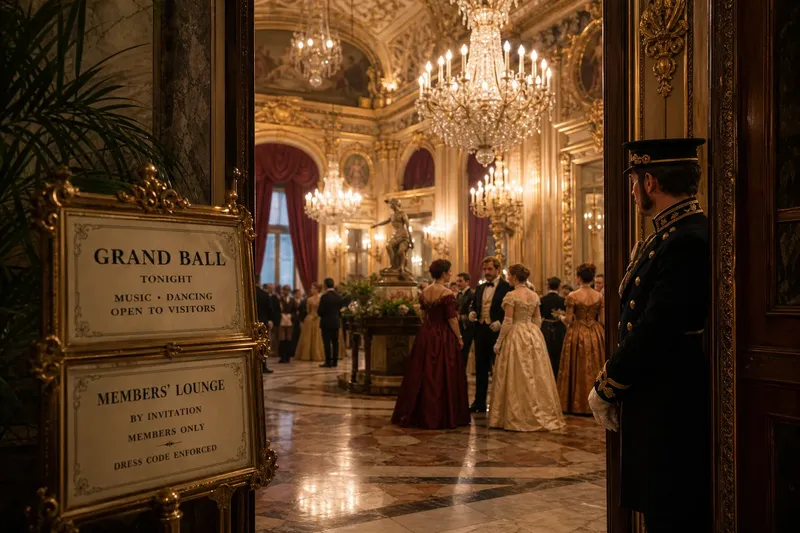
Film Casino or Novel Casino: Two Different Story Tools
Film casino scenes use visible space; novel casino scenes use selective detail and thought. Learn how each form guides attention and shapes a character’s choices.
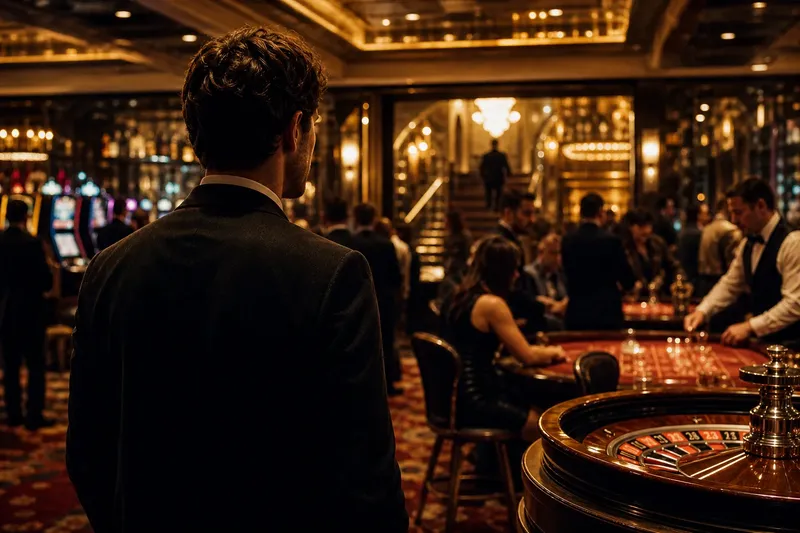
Film casino scenes can show a character crossing a crowded floor in a single shot; a novel can keep that same character fixed on one trembling hand. The difference is more than style: screen space directs the eye, while prose can move between what a character sees, remembers and refuses to notice.
Film makes the casino a visible route
A camera can establish the casino’s geography before a character speaks. A wide shot might place the entrance behind a row of tables and a bar beyond them; later, a cut can show the character moving towards a particular game. The viewer builds a rough map from those repeated views.
That map makes movement useful. A character who hesitates at a doorway, threads through a crowd or gets stopped by a staff member can reveal status and intention without explaining either. The room itself becomes an obstacle, a lure or a public stage.
When writing a film scene, decide what the audience should notice first: the character, the room’s scale or a specific object. Use framing and movement to make that choice legible rather than relying on a tour of every fixture.
Prose makes attention selective
A novel does not need to describe the whole casino. It can give a character a polished brass rail, the clatter of a tray or the stale smell of a coat, then leave the rest indistinct. Those details matter because the character has noticed them.
Point of view controls the selection. A wary newcomer may track exits and staff uniforms; a regular may barely register the entrance, noticing instead that a familiar chair has been taken. The casino’s atmosphere emerges through these priorities, not through an inventory.
Choose details that reveal the viewpoint character’s concern. If a detail changes nothing in their attention, decision or mood, it may not need to be on the page.
Sound and silence work differently on screen
Film can layer roulette calls, conversation, music and the soft scrape of chairs. A sudden reduction in that sound can make a character’s isolation feel physical, even while the room remains busy. The mix directs attention without requiring the camera to leave the character.
Prose can describe sound, but it also has direct access to interpretation. A character might hear the crowd as a single roar, or pick out one voice that reminds them of someone outside the casino. The narration can make the sound meaningful in the same sentence that introduces it.
For a screen scene, think about what becomes audible as the character moves. For prose, ask what the sound brings to mind or helps the character avoid thinking about.
Thought changes the meaning of the same room
A film can show a character staring at a mirrored ceiling, but the image alone leaves several possible meanings open. The performance, framing and editing can suggest vanity, unease or calculation; the audience still has to infer the thought.
A novel can name the thought directly, or keep it oblique through a comparison or an evasive observation. That access is powerful, but it can also flatten suspense if narration explains every motive before the character acts.
Imagine a character who has come to the casino to meet an estranged sibling. In a film, they might scan faces in the reflected panels and stop when someone enters behind them; in a novel, the narration might linger on how they keep mistaking strangers for the sibling. Both versions use the same setting, but one builds tension through visible searching and the other through repeated misrecognition.
Which form suits a casino scene?
How does film show a character feeling out of place?
Let the room’s scale and movement contrast with the character’s stillness, then use a reaction shot to register the pressure. A glance towards an exit or a pause before approaching a table can carry the feeling without explanatory dialogue.
How can a novel describe a casino without listing everything?
Filter the room through the viewpoint character’s immediate purpose. Select a few details that affect their attention, and let unimportant parts remain vague.
Can a film show a character’s thoughts without voiceover?
It can suggest thought through expression, gesture, framing and editing, though the audience must interpret those signals. A recurring visual detail can also acquire meaning as the character responds to it differently.
When should a writer adapt a casino scene for another form?
Keep the scene’s dramatic purpose, but change the method that delivers it. A passage built on inner contradiction may need a visible action in a film; a sequence built on movement may need a more selective viewpoint in prose.
Adapt the attention, not the furniture
When moving a casino scene between film and a novel, preserve what the character wants and what interferes. Then choose the form’s strongest tool: a route through the room, a cut to a revealing gesture, a shift in sound, or a detail loaded by thought.
For a film casino or novel casino scene, the useful question is not how much of the room to include, but what the audience or reader should attend to at that moment. Give each detail a job, and the casino will feel like part of the story rather than scenery placed behind it.